
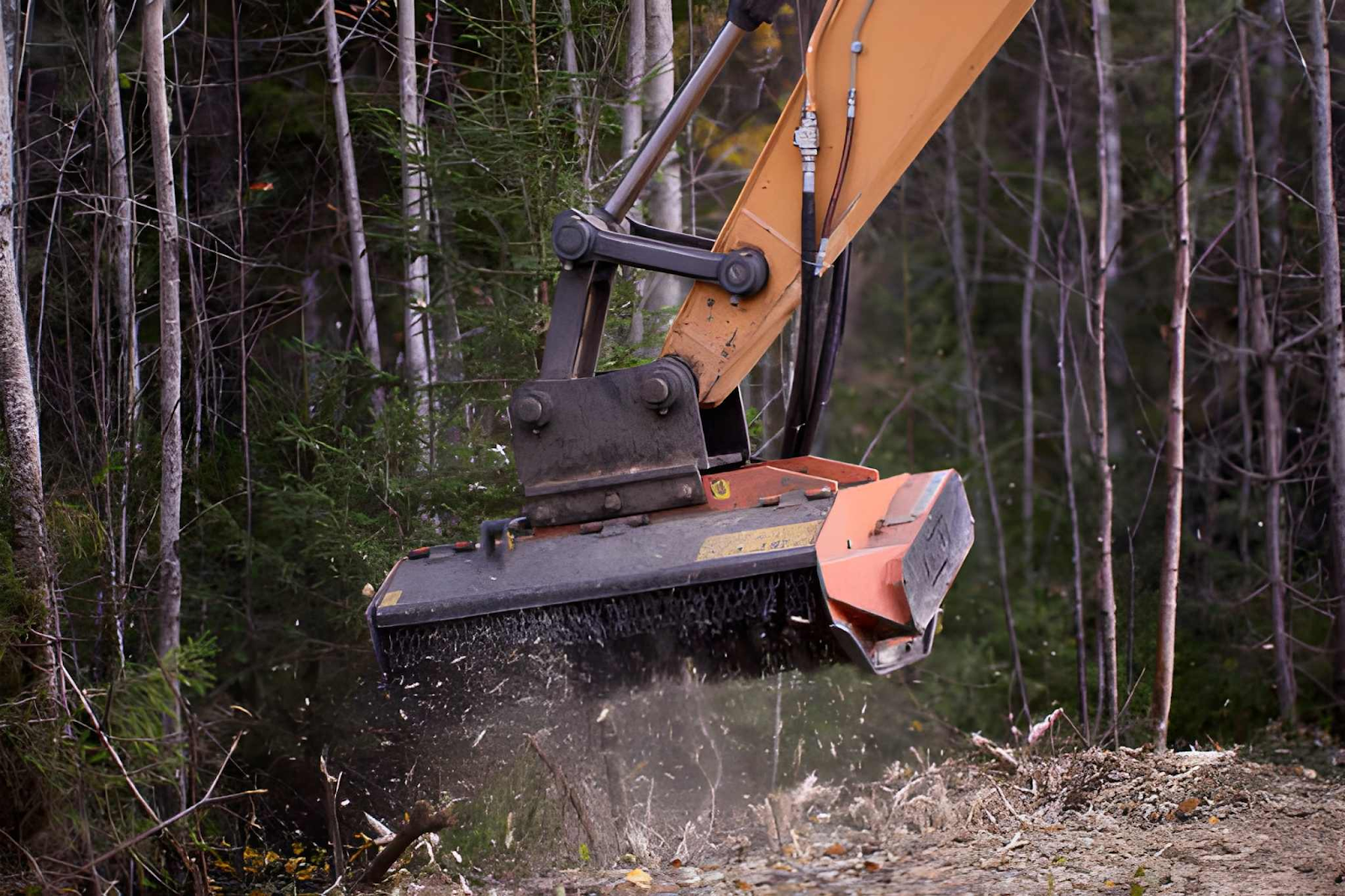
The forestry mulching Georgia property owners choose has changed how land is cleared across the state. Instead of pushing, piling, and hauling debris, modern mulching methods allow brush, small trees, and thick vegetation to be processed directly on site. The result is faster clearing, less soil disruption, and a cleaner finished landscape delivered through experienced operators and purpose-built equipment like that used by BHH Land Clearing.
For rural landowners managing hunting property, farmland, access roads, or residential acreage, forestry mulching offers a practical solution that balances efficiency with environmental responsibility. BHH Land Clearing applies this approach across Georgia properties by focusing on controlled clearing methods that improve land usability while protecting soil and surrounding vegetation.
Why Traditional Brush Clearing Falls Short in Georgia
Georgia’s land presents unique challenges. Dense undergrowth, fast-growing hardwoods, and long growing seasons cause cleared land to regenerate quickly. Traditional clearing methods often struggle to keep up with these conditions.
Bulldozing can damage topsoil and leave deep ruts. Burning requires permits and ideal weather. Hauling debris adds time and cost. These methods may solve the problem temporarily, but they often create new issues that require additional work later.
Forestry mulching addresses these challenges directly by managing vegetation at ground level while protecting the soil beneath.
What Forestry Mulching Really Means
Forestry mulching uses a specialised forestry mulcher mounted on heavy equipment. This machine grinds trees, brush, and vegetation into fine mulch that stays on the ground.
Instead of removing organic material, tree shredding returns it to the soil surface. The mulch layer helps suppress regrowth, reduce erosion, and improve moisture retention.
Because the material stays in place, there is no need for burning or hauling, which makes eco land clearing possible even in sensitive areas.
Why Forestry Mulching Works So Well in Georgia
Forestry mulching Georgia landowners rely on is effective because it matches local land conditions.
It Handles Dense Vegetation
Georgia properties often contain mixed growth, including vines, saplings, briars, and invasive species. A forestry mulcher processes this material efficiently without constant machine repositioning.
It Protects Valuable Soil
Preserving topsoil is critical for future land use. Mulching minimises ground disturbance, which helps maintain soil structure and reduces erosion during heavy rainfall.
It Controls Regrowth Naturally
The mulch layer blocks sunlight from reaching the soil surface. This slows regrowth and extends the time between maintenance cycles compared to mechanical clearing alone.
Forestry Mulching Versus Other Land Clearing Methods
Understanding how forestry mulching compares to other options helps landowners make informed decisions.
Mulching Versus Bulldozing
Bulldozing removes everything, including roots. While effective for major development, it disturbs the soil and often requires grading afterwards. Forestry mulching clears vegetation while keeping the land stable and usable immediately.
Mulching Versus Burning
Burning removes debris quickly but introduces risk, smoke, and regulatory hurdles. Mulching avoids fire hazards and leaves behind organic matter that benefits the soil.
Mulching Versus Manual Clearing
Hand clearing works for small areas but becomes time-consuming on larger tracts. Forestry mulching scales efficiently without sacrificing finish quality.
Common Uses for Forestry Mulching in Georgia
Forestry mulching adapts to many property needs across the state.
Property Line and Boundary Clearing
Clear boundaries improve access, visibility, and long-term property management without creating unsightly debris piles.
Hunting and Wildlife Management
Mulching opens travel corridors, improves habitat diversity, and supports food plot development without over-clearing.
Driveway and Access Road Maintenance
Keeping access points clear prevents overgrowth from reclaiming roads and trails.
Pasture and Fence Line Clearing
Mulching removes encroaching vegetation while preserving grass and soil health.
Environmental Benefits of Eco Land Clearing
Eco land clearing focuses on minimising impact while achieving functional results.
Forestry mulching reduces soil compaction and prevents sediment runoff. It also supports healthier microbial activity by returning organic matter to the ground.
In addition, mulched areas often require fewer follow-up treatments because regrowth is naturally suppressed.
For landowners who value sustainability, forestry mulching aligns land improvement with environmental responsibility.
When Forestry Mulching Is the Best Choice
Forestry mulching, Georgia property owners prefer, is ideal when land needs to remain usable immediately after clearing.
It works well for selective clearing where certain trees are preserved. It also fits projects where erosion control and visual appeal matter.
However, areas requiring full excavation or grading may need additional services beyond mulching alone.
Choosing the Right Forestry Mulching Provider
Experience matters in forestry mulching. Operators must understand vegetation types, machine capabilities, and site conditions to avoid damage and achieve consistent results.
At BHH Demolition, land clearing projects are approached with local knowledge and professional equipment designed for Georgia terrain. Each property receives a tailored approach rather than a one-size solution.
Conclusion and Call to Action
Forestry mulching for Georgia landowners offers an efficient, environmentally responsible way to manage overgrown property. By clearing vegetation without destroying soil structure, mulching creates usable land that stays manageable longer.
If your property needs professional brush clearing, access improvement, or eco-friendly land preparation, BHH Land Clearing provides forestry mulching services designed specifically for Georgia land conditions. Preparing your land correctly now makes future maintenance easier and more cost-effective.
Frequently Asked Questions
1. Does forestry mulching remove tree roots?
Mulching processes vegetation at ground level. Roots remain in place, which helps stabilise soil.
2. Will vegetation grow back after mulching?
Some regrowth can occur, but mulch significantly slows the process compared to traditional clearing.
3. Is forestry mulching safe near existing trees?
Yes, selective mulching allows operators to work around desired trees without damaging them.
4. Can forestry mulching be done on uneven terrain?
Mulching equipment is designed to handle slopes and uneven ground common in rural Georgia.
5. Is mulching suitable for large properties?
Yes, forestry mulching scales well for both small parcels and expansive acreage.